

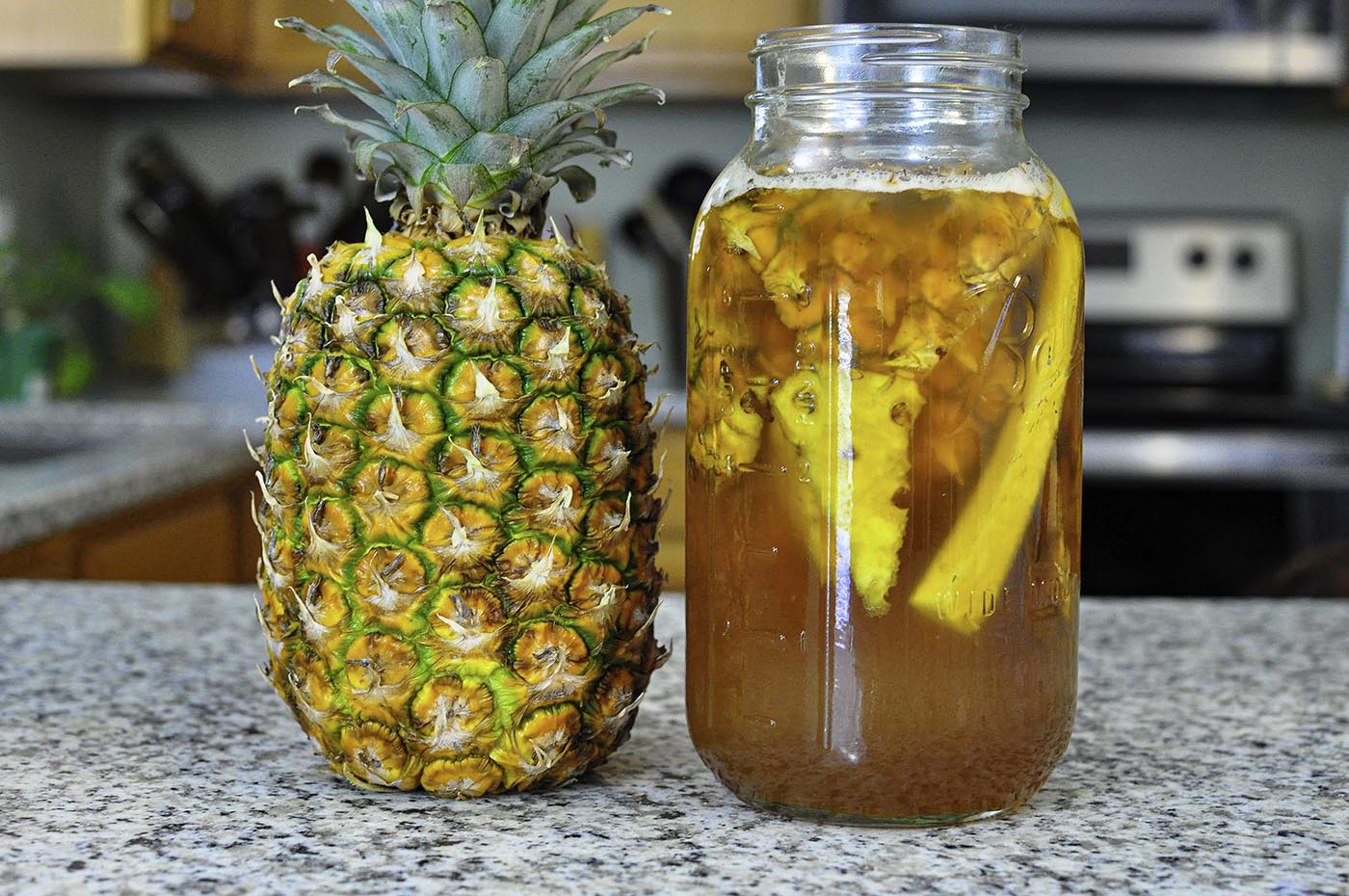
Tepache is an ancient fermented drink made primarily from pineapple peels and core, sugar, and spices. Originating from Mexico, tepache has been enjoyed for centuries as a refreshing street beverage.
The word “tepache” comes from the Nahuatl word “tepiātl,” meaning “corn drink.” While early versions were made with maize, the pineapple-based version became popular during the colonial era after pineapples were introduced to Mexico.
Traditionally, it is made from the rind (peel) and core of ripe pineapples, which are fermented with piloncillo (unrefined cane sugar), brown sugar, water, and warming spices like cinnamon and cloves.
Today, tepache is commonly sold by street vendors, often served chilled in plastic cups or poured over ice.
Here’s a deeper look at why tepache is considered a gut-friendly drink and how it may support your digestive system naturally.
Why Tepache Supports Gut Health
Tepache is known to have numerous benefits, especially for gut health.
Here’s why it’s considered a good natural probiotic:
It Creates Beneficial Bacteria
Tepache is made through wild fermentation, meaning naturally occurring yeast and bacteria on pineapple skins begin the fermentation process. This leads to the growth of beneficial microorganisms (probiotics) that can help balance the gut microbiome.
Supports Digestive Enzymes
Pineapple contains bromelain, a natural enzyme that helps break down proteins and supports smoother digestion. This can be especially helpful for people who experience heaviness or discomfort after meals.
Feeds Good Gut Bacteria (Prebiotic Effect)
Tepache contains natural sugars and pineapple fiber, which act as prebiotics. Prebiotics are food for good bacteria, helping probiotics thrive and multiply in the gut.
This combination of prebiotics and probiotics makes tepache especially beneficial for gut health.
May Help Reduce Inflammation in the Gut
Bromelain and antioxidants in pineapple may help reduce inflammation in the digestive tract. This can support people dealing with mild gut irritation, Indigestion, and inflammatory digestive issues (in mild cases)
Helps Restore Gut Balance
Fermented drinks like tepache may help repopulate good bacteria, especially after:
Antibiotic use
Periods of high sugar or processed food intake
Digestive illness
Tepache Ingredients
1 ripe pineapple (use the peel and core)
4–6 cups warm water (enough to cover the pineapple peels)
¾–1 cup piloncillo or brown sugar or honey (adjust to taste)
1 cinnamon stick
2–3 whole cloves (optional)
Optional additions:
Fresh ginger slices/orange peel
ALSO READ: This Pineapple Sorbet Recipe Is All You Need On A Hot Sunny Day
How to Make Tepache
1. Wash the pineapple thoroughly to remove dirt. Peel the pineapple and save the peel and core. Set the fruit aside for eating.
2. Heat water in a large pot until it starts to boil. Remove from heat and add brown sugar, stirring until fully dissolved. Set aside to cool.
3. In a large glass jar or jug, add the pineapple peels, piloncillo (or sugar), cinnamon stick, cloves, and optional spices. Pour in filtered water until fully submerged and stir until the sugar dissolves.
4. Cover the container loosely with a cheesecloth or lid. Leave it at room temperature for 24-48 hours, depending on how sweet or tangy you prefer it.
5. Stir once daily. You’ll notice bubbles forming as fermentation begins. After 2 days, check the taste. Once fermentation reaches the desired level, strain the mixture to remove all solids.
6. Refrigerate the liquid to slow fermentation and serve chilled.