

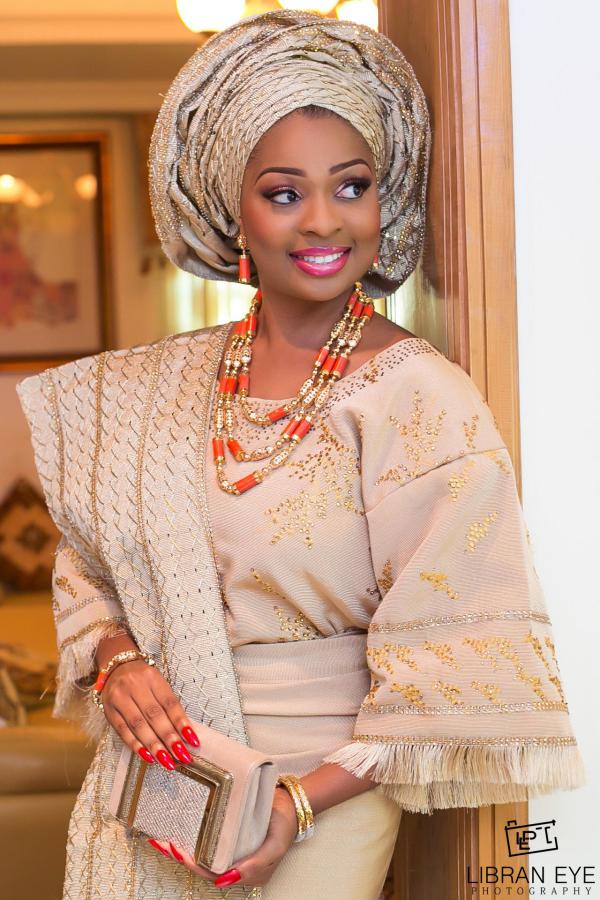
The Yoruba traditional attire is an example of how old traditions are reflected in the contemporary wedding ceremony. A common Yoruba wedding starts with the choice of the traditional fabric Aso-Oke, which can also be used for future Yoruba traditional marriage attire.
The official fabric of the Yoruba people is called the Aso-Oke. Aso-Oke is used for the production of Yoruba native attire woven in a manual way from 100% natural materials; threads are made of saturated, handmade dye or cotton. In the past, it was the only fabric used for special occasions, but today the story has changed. Lace, Ankara, damask, and other fabrics are also popular choices, but Aso-oke will forever remain the king of all Yoruba fabrics.
We will educate you about Aso-oke, its history, and much more, but for now, we’ll cover the different Yoruba traditional looks for brides, grooms, family, and friends.
1. Bride’s first outfit
A Yoruba bride is expected to wear the complete traditional attire of the Yoruba folks from head to toe. She wears an Iro (wrapper tied around the waist), Gele (headgear), and an Ipele/Iborun (shawl).
The fabric used for her attire is aso-oke, the signature fabric of the Yoruba people.
She completes the traditional wedding look with a Buba (short, wide, and loose blouse with long sleeves).
This buba can be made from the same Aso Oke used to make the iro, ipele, and gele.
2. Bride’s jewelry

Her jewelry will consist of earrings and necklaces made of beads or gold (could also be costume jewelry), or a combination of both. Many brides have their ileke (beads) custom-made, especially for the wedding.
No Yoruba bride is complete without her pair of matching shoes, a matching bag, and her feather-like fan. Most brides also wear a veil over their gele.
3. Bride’s second outfit
Some brides choose to change into another outfit that is less spectacular than the first one. This second traditional Yoruba attire is usually made from other non-aso-oke fabrics such as damask or lace.
In addition, during the white wedding reception, she may wear a second wedding dress or a reception gown.
ALSO READ: Here’s What To Expect On A Yoruba Traditional Engagement List (Eru Iyawo)
4. Family outfit
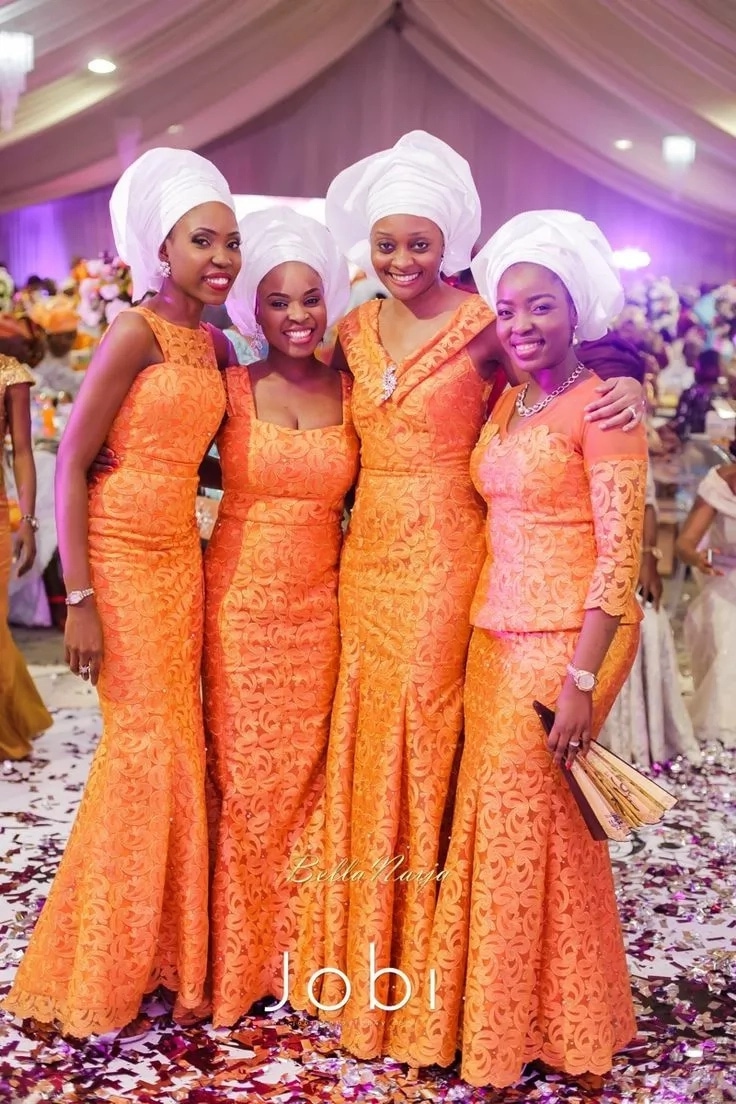
The family members and general guests attending the traditional wedding are given the option to buy the aso ebi. The infamous Aso Ebi is the official wedding fabric distributed to guests attending the wedding in order to achieve a more uniform and organized look.
It can be made from lace, ankara, damask, or any other fabric of choice. For ladies, there are gele given to them in either Aso oke or normal gele.
The men are also given a small part of this fabric and asked to make a cap (fila). The fabric colors are the same as other wedding colors, such as the decoration color theme. Many families pick aso ebi for the headgear (gele and fila) alone and leave their guests to make their choices of clothes.
Guests can then wear a white traditional attire (which is a very popular choice) or any other colour that matches the headgear fabric chosen by the family.
5. Friends’ outfit
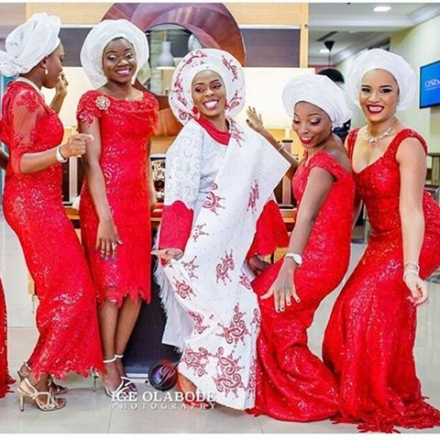
Friends of the bride, Ore-Iyawo, are sometimes given a separate aso-ebi, which differs from that of the other guests. The same goes for the groom’s friends. Their attires are usually trendier and more suitable for younger men and women. In times past, velvet was a very popular ore-iyawo choice, but now, Ankara and lace have taken over the magic.
