

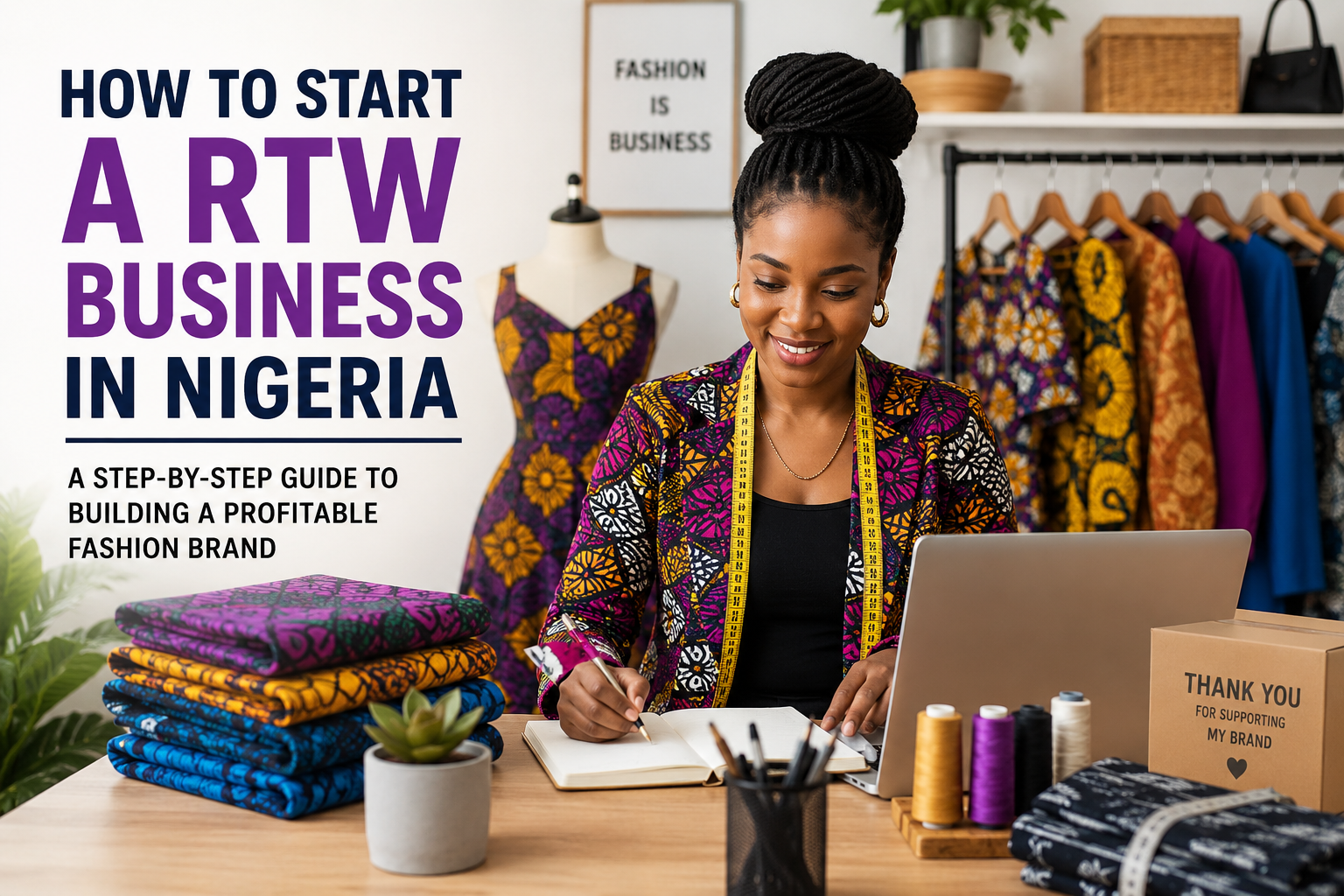
The emergence of ready-to-wear (RTW) has changed the game of fashion, with Nigeria taking top position as one of the largest and most vibrant in Africa.
As women increasingly seek stylish, affordable, and convenient clothing options, RTW brands are filling the gap by offering ready-made outfits that can be purchased and worn immediately, unlike traditional tailoring, which often requires multiple fittings and long waiting periods.
Whether you’re interested in selling Ankara dresses, Adire sets, tie-dye pieces, corporate wear, casual outfits, or luxury fashion, an RTW business can be a profitable venture.
If you’ve been considering starting one, here’s a step-by-step guide on how to start a successful ready-to-wear (RTW) business in Nigeria.
What is a ready-to-wear (RTW) business?
A ready-to-wear business involves designing, producing, and selling clothing in standard sizes rather than creating custom-made outfits for individual customers.
RTW brands produce garments in different sizes, such as small, medium, large, and extra large, allowing customers to buy and wear them immediately.
Popular RTW categories include Ankara fashion, Adire wear, tie-dye outfits, corporate wear, casual/lounge wear, two-piece outfits, and plus-size fashion.
ALSO READ: 8 Tips To Know Before Starting A Fashion Designing Business
1. Identify your niche
The fashion industry is highly competitive, so it is important to define your niche before launching your brand.
Ask yourself:
- Who am I creating for?
- What type of clothing will I sell?
- What problem am I solving?
Some RTW niches include the following:
- African Print Fashion (Ankara, Adire, Batik, Kampala, and Tie-Dye fabrics)
- Corporate Fashion (Office-friendly dresses, blazers, pants, two-pieces, and shirts)
- Casual and Everyday Wear: Comfortable and stylish outfits for daily use.
- Plus-Size Fashion: Fashion-forward clothing designed specifically for curvy women.
2. Create your business plan
Every successful business starts with a clear plan. Hence, having a business plan provides a roadmap that helps you make more informed decisions.
Your business plan should include elements like the following: Executive summary, company description, products and services, market opportunities, sales and marketing strategy, competitive and market analysis, and financial projections.
3. Research fashion trends
Understanding what customers want is critical in the fashion business as trends keep changing.
Pay attention to people’s demands. What are they buying and wearing? Also study popular RTW brands, fashion influencers, social media trends, customer reviews, and emerging styles.
This will help you create collections that meet market demand.
4. Source quality fabrics and materials
The quality of your products largely depends on the materials you use. Also, to ensure you meet quality standards with consistent profit, it is best to have a reliable supplier that won’t compromise on quality.
Places to try include Balogun Market, Lagos; Tejuosho Market, Lagos; Oshodi Market, Lagos; Ariaria Market, Aba; and local fabric distributors.
Also invest in quality zippers, buttons, labels, and packaging materials.
5. Find skilled tailors and production partners
One of the biggest factors that determines the success of an RTW brand is production quality.
To ensure steady production, you can hire in-house tailors, outsource production to fashion houses, or partner with garment factories.
Look for professionals who can deliver neat finishing, consistent sizing, timely delivery, effective communication, and high-quality craftsmanship.
6. Build your brand identity
Branding in any business is important, and in a highly competitive market like RTW, it helps you stand out. Your brand should have a unique identity that customers can recognize.
A catchy business name, logo, brand colors, tagline, font, and product labels are things you should invest in to build a strong identity.
7. Create an online presence
In this digital age, you don’t need a physical location first; you need an online presence for customers to find and purchase your products.
Start by creating your website and social media channels, including Instagram, TikTok, Facebook, WhatsApp Business, online marketplaces, etc.
As you scale, you can think of expanding.
8. Invest in product photography
Fashion is a highly visual business where customers often make buying decisions based on what they see online. Ensure your photos are well-lit, high-quality, consistent, and professional.
You can use models, mannequins, or flat-lay photography depending on your budget.
9. Price your products correctly
You must avoid the common mistake of pricing based only on fabric costs, which many fashion entrepreneurs make.
Pricing should cover
- Fabric costs
- Tailoring costs
- Packaging
- Delivery
- Marketing expenses
- Profit margin
- Salaries
Your prices should cover expenses while still generating profit.
10. Market your brand consistently
To stay in business, you need to market your brand consistently, as it is essential for growth and even more important as a newbie.
Some effective marketing strategies include:
- Social media marketing/Ads promotion
- Influencer collaborations
- Fashion content creation
- Giveaways
- Email marketing
Post regularly:
- New arrivals
- Styling tips
- Behind-the-scenes content
- Customer reviews
- Videos and reels
11. Deliver excellent customer service
The role of customer service in any business cannot be overemphasized, as it can make or break your business.
Customers are open to coming back or even likely to recommend you to other potential customers if you focus on things like responding swiftly, effective communication, reliable delivery, accurate sizing information, and professional handling of complaints.
12. Start small
Instead of producing dozens of styles at once, start with a small and limited collection of about 10-20 designs of different size options. This will allow you to test the market and reduce financial risks and costs. It will also help you identify your best-selling products. Monitor what sells best and gradually increase based on demand.
Common challenges of running a ready-to-wear (RTW) business
Like any business, RTW fashion comes with challenges.
Some common issues include:
- Rising fabric costs
- Production delays
- Inventory management
- Competition
- Sizing concerns
- Logistics and delivery challenges
However, with proper planning and by maintaining quality standards, you can navigate these challenges successfully.
How much does it cost to start?
Startup costs vary depending on your scale.
A small Ankara RTW business with a home-based setup can be started with N100,000-N300,000 and up to ₦300,000 to ₦1 million, depending on whether you plan to produce large quantities or open a physical store.