

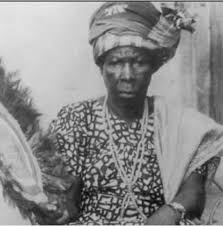
Ahebi Ugbabe is recognized today as the only female king in colonial Nigeria. She remains a well-known figure in Nigeria’s history for her fight against oppression and patriarchy.
Here are some fascinating things to know about her.
1. Ahebi Ugbabe was born around 1880 in Enugu-Ezike, a community in Igboland, in the late 19th century.
2. Her father, Ugbabe Ayibi, was a farmer and palm wine tapper, and her mother, Anekwu Ameh, was a farmer and trader.
3. She fled her village as a teenager, seeking refuge in Igalaland after her father attempted to marry her off due to an offense that he committed. According to local customs, this required his daughter to be offered in marriage to a deity—a practice known as “igo ma ogo.”
4. Ahebi became a commercial sex worker and used the situation to her advantage by aligning herself with powerful men such as the ruler of Igala and British colonial officials.
5. She became a polyglot, learning to speak languages such as Igala, Nupe, and Pidgin English.
6. Ahebi used her connections and diplomatic skills to build relationships with colonial officers when the British colonial administration expanded into southeastern Nigeria in the early 1900s. These alliances helped her gain influence and power.
7. Upon her return to her hometown, Enugu-Ezike, she was able to displace Ogwu Okegwu as the village headman, leveraging her ability to speak English.
8. Ahebi was appointed a Warrant Chief by the British colonial government, a powerful administrative role used by colonial authorities to govern local communities.
9. She was crowned King (Eze) of Enugu-Ezike with the aid of the Attah of Igala and is the only documented female king in colonial Igbo history.
10. As ruler, she presided over court cases, collected taxes, and governed local affairs. She even had male attendants and officials, further reinforcing her authority in a male-dominated political structure. Toward the end of her reign, many male elders in her community began to resist her authority, creating tension.
11. She violated traditions by attending a spiritual masquerade ritual, which was only for men, with her mask. The male elders and Ahebi went to court to settle the case, and the British sided with the male elders, undermining Ahebi’s rule.
12. She performed her burial rites while still alive because she did not trust that her society would accord her a befitting burial.
ALSO READ: From The Barracks To Oxford Dictionary: 5 Facts To Know About Nigeria’s Mammy Market
13. Ahebi died in 1948, and she was buried according to the local customs for burying men.
Source: Wikipedia, Nwando Achebe