

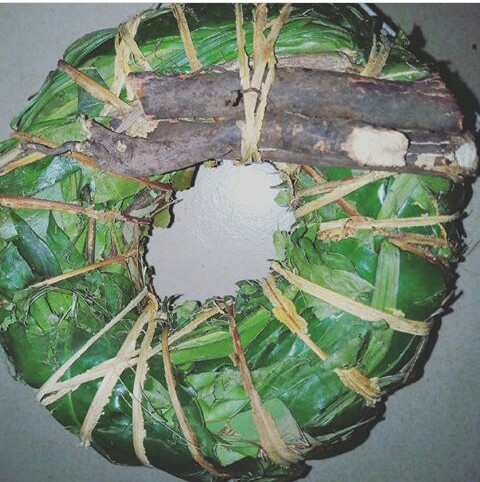
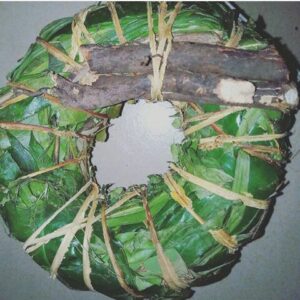
Aju Mbaise is a traditional Nigerian herb that originated from Mbaise in Imo State, Nigeria.
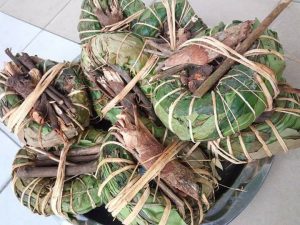
It typically contains prekese, Uziza seeds, Uda (Negro pepper), pawpaw leaves, and the bark of a special medicinal tree. The combination is wrapped together to form a coiled wrap, hence the Igbo term ‘Aju,’ which means ‘wrap.’ This herb is commonly consumed by nursing mothers for postpartum recovery and cleansing.
Aju Mbaise has a bitter-sharp taste, due to the spices it contains, but the aroma is delicious. The water can be taken alone as a form of tea, or it can be used to cook pepper soup.
Here are some of its health benefits.
1. It is effective for weight loss
Aju Mbaise is extremely effective for losing overall weight and flattening your tummy, especially after childbirth (the biggest effect you will get if you use it within 3-4 weeks).
2. It flushes the womb
Aju Mbaise helps to remove the stale and bad blood in the womb. It is also used by women who have had miscarriages or abortions to flush their womb, make it healthy, and help prevent complications during future conceptions.
ALSO READ: 7 Health Benefits Of Uda Seed (Negro Pepper)
3. It regulates ovulation
Aju Mbaise helps to regulate and stabilize ovulation in women.

4. It balances the menstrual cycle
Women facing irregularities in their menstrual cycle take Aju Mbaise to balance it and make their periods more predictable and regular, giving it a more even flow. It also makes menstruation less painful for women who experience pain during menstruation.
5. It is a fertility booster
Aju Mbaise is also a natural fertility enhancer, as it cleanses away the dead cells. For women who are struggling with infertility, cleansing can be important for ensuring that their bodily systems are completely ready to conceive. “After detoxification, a woman can get pregnant faster because of egg quality, and the environment of the womb is much healthier for conception.
Side Effects
The risks concerned with taking Aju Mbaise are minimal. Pregnant women are advised to stay clear of the herb because it increases the risks of miscarriage and also causes defects in babies. Nursing mothers should also limit their intake of the herb, as it can affect the weight of the baby. However, prolonged consumption or high doses may cause potential side effects like liver toxicity and kidney damage. Some common side effects associated with the herb include light-headedness or dizziness when too much is consumed.
