

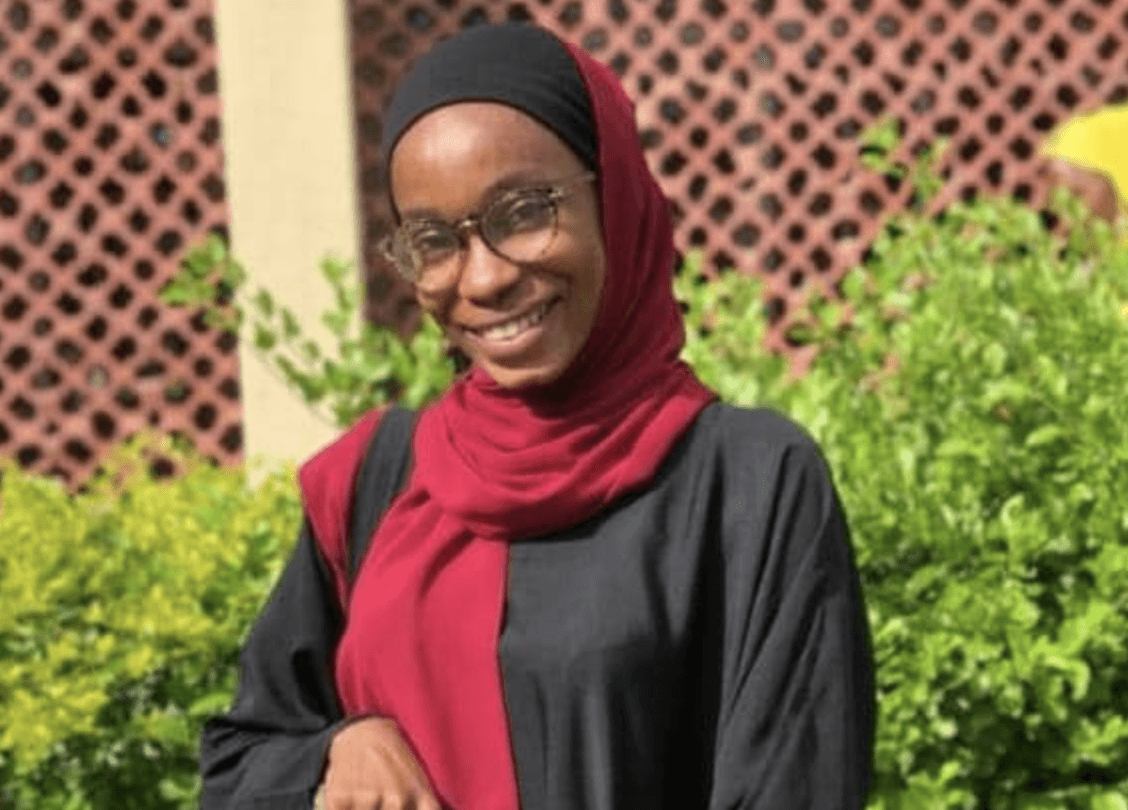
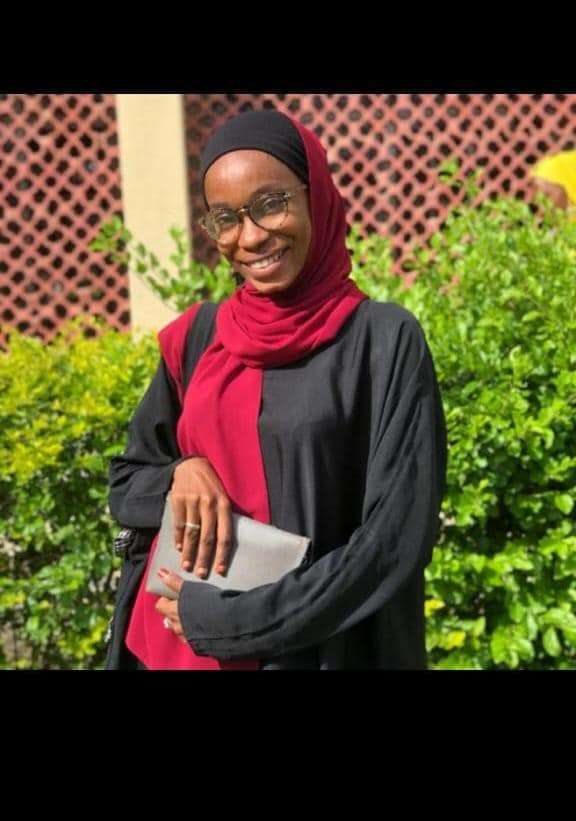
 Muminah Musa Agaka recently made headlines when she broke a 38-year jinx at the Sociology Department of the Ahmadu Bello University (ABU), Zaria, by graduating with a first class (4.60 CGPA).
In this interview with Daily Trust, the 22-year-old gave an insight into her life, motivation, and study routine.
Tell us about your educational background
I attended Islamic Nursery and Primary School, Ilorin, and Islamic College, also in Ilorin. From there, I started an IJMB program at Lanko Theory Educational Service Limited and moved to Alhikma University, where I wrote the IJMB exams and went to Ahmadu Bello University.
I am also a henna artist. I have been into henna art since I was 11 years old. It is something I enjoy doing because it enables me to assist my mom in the little way I can.
Did you choose to study sociology?
I chose sociology but really didn’t have deep knowledge of what it was all about. I was just a young girl who got to know about the course when it was very close to registration. It sounded interesting, so I picked it.
ALSO READ: Niece To AfDB President, Akinwumi Adesina Breaks OAU’s Record In Medicine
What were the challenges you encountered in school?
Actually, leaving Ilorin for the Northwest at the starting point was a challenge because of the weather and culture shock. Ilorin is much warmer, and there were certain foods I was not used to, such as dan wake.
The university environment in its entirety was something I was new to. Being a direct entry student without the basic knowledge of sociology made me read like never before.
Health-wise, I can barely withstand stress, so every semester I was admitted at least three times. But I thank the Almighty Allah for the gift of life and how everything turned out.
The Department of Sociology at ABU is over 50 years old, but you are the first to bag a first class in 37 years. Was this something you deliberately worked to achieve?
Actually, bagging a first class was never a dream before stepping into the university. The whole ‘dream’ popped up when I had a 5.0GPA in 300L and saw that bright light on my mother’s face. It was not the first of its kind, actually, but that very day, it came with tears, and I felt so happy and wished to see more of that. My father died when I was seven years old.
I just felt I should keep doing well, and that ended in me bagging a first class. I won’t say I set a target, but all these came with a whole lot of sacrifices and consistency. At some point, I felt like I was chewing more than I could swallow. I was making henna during the holidays and then resumed burying my head in studies. At times, I had a migraine for three days, nonstop. I only did things I thought I should be doing, and God crowned my efforts.
Can you share your journey towards making first class?
The journey wasn’t an easy one. As I said, almost everything comes with sacrifices. There were so many times I wanted to take a break, but “dem no born me well” because I still had a lot to cover. During my stay in school, I had friends who actually walked the walk with me—family members such as my aunt, Mrs. Hajara Baba, and lecturers who turned mentors, such that despite their tight schedules, they would guide me. I will forever be grateful to them because they made the journey less tough for me.
How did you feel when your efforts paid off?
I learned from a mentor in Zaria that an individual should never feel he/she is better than anyone, nor should he/she feel that anyone is better. He taught me to never be proud and never to have low self-esteem. Thus, the feeling I get among my friends and community is that of being happy and grateful to God. Achieving that doesn’t make others any less than me, and I keep in mind to keep my head high and shoulders up.
Have you always been an exceptional student?
No; far from exceptional, actually. From my early primary school days, I would call myself dull. I remember times when my mates would sing for me when I didn’t get the answers right. At my junior secondary school, I can’t recall doing any proper reading, but at the same time, I can’t recall failing. Maybe I grasp most things when taught. It was at senior secondary school that I started reading properly. I would read to understand literary terms and constitutional development, and, for the very first time, I got a gift. I guess that was when it all started. My reading culture got enriched when I applied for IJMB. I resumed a bit late and had a lot to cover, so Mr. Lanko, the director of the IJMB center, ensured I read. And I was always ready to answer my questions. These processes and those I developed, getting to the sociology department, were what paid off, I guess.
What was your study routine like in school?
Every night, I would engage in discussing what we were taught for at least three hours. Secondly, I would read till the next day and take breaks on the weekends. Thirdly, at midnight on some of those nights, I would take a break from reading to make Tahajjud (night prayer), usually just two rakats, and pour out my heart to God. Fourthly, I would try to also explain to whoever was finding it hard to understand. I learned that knowledge is only useful when you instill it in others, and by doing this, I realized that it stuck more in my head. And more ideas on the whole discussion keep popping up in the course of my explanations. Alhamdulillah for how it later turned out.
What are your plans?
I plan to further my education and grow in my business. Furthering my education is really something I desire, as I would love to have my master’s and PhD. It will be a dream come true, though I don’t have the financial means yet. I keep hoping that, if God wills, through growing my henna business and securing a scholarship, I will be able to achieve it.
What advice can you offer youths?
My advice to them is that they should always be ready to learn and ask questions when they do not know. Read very hard and pray very hard also, and never should they limit themselves. For those who are doing well, they should never let themselves be consumed by pride because that will drive them to doom.
Also, I would like to encourage them to learn a skill to complement their tertiary education certificate. They should study themselves and figure out what they love doing because passion is required when you want to learn a skill. It makes you want to know more about it and also makes the work less tiring to do in the long run. This is what is required of us as Nigerians – to be more job creators than job seekers. This will help lessen so many vices we have in our society today.