

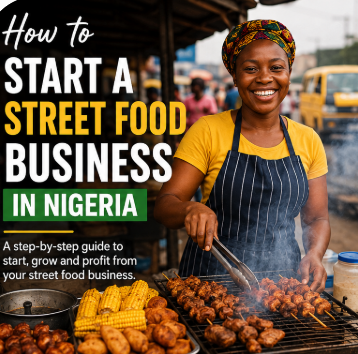
As the demand for convenient and budget-friendly food continues to grow in Nigeria, starting a street food business has become one of the most profitable small business opportunities in the country.
The good news is that you don’t need millions of naira to get started. With the right location, quality food, and excellent customer service, you can build a thriving business that generates steady daily income.
Here’s everything you need to know about starting a profitable street food business in Nigeria.
1. Decide your niche
Before you start a street food business, the first step is choosing your niche. Choose foods that are in demand in your target area and fit your budget.
Some profitable street food ideas include akara, abacha, moi-moi, suya, roasted corn and pear (seasonal), bole and roasted fish, shawarma, small chops, noodles, spaghetti, fried yam and sauce, puff-puff, buns, etc.
Choose foods you can prepare consistently and that people already enjoy buying.
2. Do market research
Doing market research will help you understand your target market and potential customers.
Ask yourself:
- Who will I be selling to?
- What time is best?
- What foods are already selling well and are in high demand?
- Who are my competitors?
- How much are customers willing to pay?
You can also take out time to visit busy food spots and observe customer behavior before making your decision.
3. Create a business plan
A business plan, no matter how simple, keeps you organized even if you’re starting with a small roadside stand.
This should include your business name, food offerings, startup costs, daily operating expenses, pricing, marketing strategy, expected profits, and growth plans. If in the future you need funding, a business plan will also help.
4. Choose a strategic location
For a street business, location is very key and can determine whether your business succeeds or struggles. Consider places like the following: bus stops, markets, schools, universities, office complexes, industrial areas, hospitals, motor parks, etc.
Ensure your chosen location has high foot traffic and is safe and accessible.
5. Obtain necessary permits
Depending on your state and local government, you may need certain permits before operating.
These may include:
- Local government trading permit
- Environmental sanitation approval
- Food handling certification
- Business registration (optional at the beginning but advisable as you grow)
Operating legally can help you avoid unnecessary disruptions.
ALSO READ: A Step-By-Step Guide On How To Start A Mobile Food Business In Nigeria
6. Practise cleanliness and food safety
Cleanliness is very important, and customers are more likely to buy from vendors who maintain high hygiene standards.
Ensure you always wash ingredients properly, wear clean aprons and hairnets, use clean water, keep cooking areas tidy, store ingredients properly, and dispose of waste responsibly.
7. Pricing
Pricing properly will ensure you stay in business for a long time.
Your pricing should cover:
- Ingredients
- Cooking fuel
- Labour
- Packaging
- Transportation
- Rent (if applicable)
- Profit
Study nearby competitors while ensuring your prices remain profitable.
8. Build a strong brand
A strong brand is what sets you apart, and even a roadside food vendor can build a memorable brand.
Focus on building a catchy business name, attractive signage, unique packaging, and friendly customer service.
People often return because they trust the brand, not just the food.
9. Market your business
Walk-in customers are not enough, and you can reach more people who desire what you offer if you market your business.
Promote your business by:
- Creating a website (if possible)
- Opening social media pages (Instagram, Facebook, TikTok)
- Posting food photos regularly
- Encouraging satisfied customers to refer friends
- Partnering with offices, schools and organisations nearby
- Registering on food delivery platforms like Chowdeck and Glovo to reach more people
- Offering discounts when necessary
Word-of-mouth remains one of the most powerful marketing tools in the food business.
10. Deliver excellent customer service
You can’t build a great brand without customers, and providing excellent service can set you apart from competitors. Because happy customers become repeat customers, always ensure you are polite, attend to customers’ orders promptly, listen to complaints, and reward returning customers when possible.
- Be polite.
- Serve quickly.
- Listen to complaints.
- Thank customers.
- Remember regular customers whenever possible.
11. Keep proper financial records
Keeping records helps you identify what is working and where improvements are needed.
Track things like:
- Daily sales
- Expenses
- Inventory
- Profits
- Customer orders
FAQs
How much does it cost to start a street food business in Nigeria?
Startup costs vary depending on the type of food and equipment, but many small vendors begin with between ₦150,000 and ₦500,000.
Do I need to register my business?
While some vendors start informally, registering your business is recommended as you grow. It can make it easier to access funding, open a business account, and secure larger opportunities.
Which street food sells the most in Nigeria?
Popular options include suya, akara, bole, shawarma, rice meals, fried yam, noodles, moi moi, pepper soup, and roasted corn, though demand varies by location.
Can I start from home?
Yes. Many entrepreneurs begin by cooking from home and selling through deliveries, social media, or a small roadside stand before expanding.