


A Pap test, also known as a Pap smear, is a common cervical cancer screening test. It is used to check for abnormal cell changes in the cervix that could lead to cervical cancer.
But how is a Pap smear done? Who needs one? How much does a Pap smear cost in Nigeria, and where can you get one?
Here are six important things every woman should know before getting a Pap smear done.
1. How is a Pap smear done?
For women who have never had one, the idea of a Pap smear can be uncomfortable or intimidating.
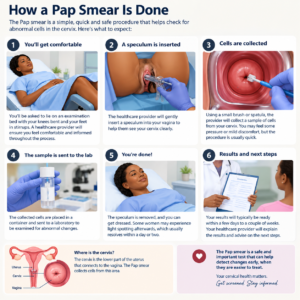
You will generally be asked to lie on an examination bed with your knees bent. A healthcare professional will gently insert a speculum into the vagina so they can see the cervix. They will then use a small brush or similar instrument to collect cells from the cervix. During the test, a healthcare professional uses a speculum to gently open the vagina and collect a small sample of cells from the cervix. The sample is then examined in a laboratory for abnormal changes.
You may experience some pressure or mild discomfort, but the procedure itself is usually brief.
Some women may experience light spotting afterwards. If you experience significant pain or heavy bleeding after the procedure, contact your healthcare provider.
It is also perfectly reasonable to tell the healthcare professional if you are nervous or uncomfortable. You can ask questions and request that they explain what they are doing throughout the procedure.
2. Pap smear testing is recommended from age 21
It is advised and recommended that from the age of 21, you get a Pap smear every 3 years. Even if you are sexually active, it is not recommended under the age of 21. How frequently a woman should be screened depends on factors including her age, the type of cervical cancer screening available, her previous screening results, and her individual health history.
Here are the cancer screening recommendations
If you are 21 to 29 years old
- Women ages 21 to 29 should get a Pap smear every three years. Even if you are sexually active, you don’t need a Pap test before age 21.
If you are 30 to 65 years old
- Women ages 30 to 65 should get:
- A Pap test every three years, or
- An HPV test every five years, or
- A Pap test and HPV test together (called co-testing) every five years
If you are older than 65
- Women older than 65 should talk to their health-care provider to see if screening is still necessary. You may no longer need a Pap and HPV if you’ve been screened regularly and had normal results.
3. You should not wait for symptoms before getting screened
Early cervical cancer may not cause obvious symptoms. This means that a woman can feel completely well and still have abnormal cervical cells that need attention.
However, some symptoms can occur as cervical cancer develops. They may include:
- Unusual vaginal bleeding
- Bleeding after sex
- Bleeding between periods or after menopause
- Unusual or persistent vaginal discharge
- Pelvic pain
- Pain during sex
These symptoms, however, do not necessarily mean that a woman has cervical cancer. They can be caused by several other conditions.
ALSO READ: 9 Factors That May Increase Your Chances Of Getting Cervical Cancer
4. How much does a Pap smear cost?
The cost of a Pap smear in Nigeria varies depending on where you have the test done.
Government hospitals, teaching hospitals, private hospitals, diagnostic centres, and specialist clinics may all charge different prices. The cost can also vary between cities and according to whether you are having a Pap smear alone or a broader cervical cancer screening package that includes HPV testing.
Before booking an appointment, ask the facility:
- How much does the cervical cancer screening cost?
- Is it a Pap smear, an HPV test, or both?
- Does the fee include laboratory analysis?
- When will the results be available?
- Will a doctor or healthcare professional explain the results?
Because healthcare prices can change, it is best to contact the facility directly for its current price rather than relying on an old price quoted online.
5. An abnormal result does not mean you have cancer
An “abnormal” Pap smear result can understandably be frightening, but it does not automatically mean that you have cervical cancer.
A Pap test may identify cells that have changed or look unusual. Some changes may disappear on their own, while others may require closer monitoring or additional tests.
Depending on the result, your healthcare provider may recommend repeating the screening test, performing an HPV test, carrying out a closer examination of the cervix, or performing a biopsy.
6. How is it different from an HPV test?
A Pap smear looks for abnormal changes in cervical cells, while an HPV test looks for high-risk types of human papillomavirus that can cause cervical cancer. Both are related to cervical cancer screening, but they are not the same test.
Human papillomavirus (HPV) is the main cause of cervical cancer, and HPV testing is now an important part of cervical cancer screening. Which test you need and how often you need it depends on factors such as your age, medical history, previous screening results, and the screening guidelines used by your healthcare provider.